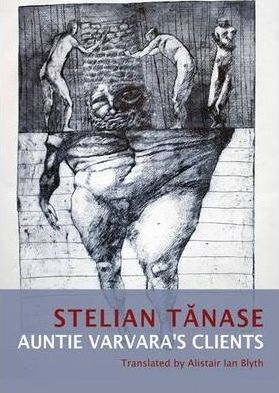
Auntie Varvara's Clients | Stelian Tanase
32,00 lei
În stoc la magazin
Prețul este cel comunicat de carturesti la ultima actualizare și se poate schimba oricând. Prețul valabil este cel afișat în magazin în momentul comenzii. Transportul nu este inclus.
Cumpără acum- Preț preluat din magazin și actualizat zilnic
- Comanda se finalizează în siguranță la partenerul nostru
- Nu adăugăm niciun cost: plătești exact prețul magazinului
- Vezi mai jos cum a evoluat prețul, ca să știi dacă reducerea e reală
Evoluția prețului
Urmărim prețul acestui produs de prea puțin timp ca să avem ce desena. Revino peste câteva zile: notăm prețul la fiecare actualizare și afișăm graficul de îndată ce avem cel puțin două observații.
Descriere
Stelian Tanase's book explores the politics of the totalitarian state. He is an historical authority on the communist period in Romania. Auntie Varvara's Clients brings to life documents discovered in the archives of the pre-communist secret police, the Siguranta (nicknamed Auntie Varvara). This extensive work reveals a regime reliant on secrecy. The narrative changes tense unannounced, giving a surreal, filmic quality to the writing. Tanase takes us from the early days of illegal membership of the communist underground, at the end of the First World War, to the eventual rise to power and the struggle for supremacy. Auntie Varvara's Clients is illustrated with the art of contemporary Romanian artist Cristian Tarba, as well as original Siguran mugshots and photographic portraits of members of the underground including Gheorghe Gheorghiu-Dej, Ana Pauker and Nicolae Ceausescu. One of the main theses of Auntie Varvara s Clients is that the organisational structure of the underground a closed, rigidly hierarchical secret society, comprising cells, of whose members was demanded blind obedience and unthinking submission to the arbitrary will of the absolute leader, and in which dissent or apostasy was punishable by death was extended to the whole of Romanian society once the communists seized power. Romania becomes a vast prison camp, what Tanase calls a carceral society. The inmates of this prison are housed in barrack-like conditions (communal flats and shoddily built prefabricated concrete blocks). They are subjected to strict rationing (food queues, shortages, central economic planning as a means of mass repression through enforced poverty; citizens are too exhausted by the time-consuming effort to obtain enough to eat for them to put up any resistance against the regime).4 The barbed wire fence of the prison camp runs for the entire length of the national borders (travel abroad is restricted to all but a privileged few, and those attempting to escape are summarily shot). The camp guards administer hard labour (the vast Danube-Black Sea Canal construction site became a mass grave for the inter-war elites and for those peasants who opposed collectivisation) and fatigues (for example, in Romania, students and even school children were forced during their holidays to carry out unpaid agricultural labour and work in factories so-called patriotic labour ). As in any prison, individual privacy is abolished: surveillance is omnipresent; the prison warders the authorities spy on the inmates and encourage them to spy on each other. This vision of society as a vast prison, a carceral society, is also known as kazarmnyy komunizm (barracks communism) or Nechaevshchina (Nechayevism). Sergey Gennadiyevich Nechayev (1847-1882) was the Russian revolutionary who inspired the character of amoral fanatic Pyotr Stepanovich Verkhovensky in Dostoevsky s Besy (1871-72) (variously translated as Demons, The Devils, The Possessed). Nechayev's Katekhizis Revolyutsionera (The Catechism of the Revolutionary) (1869), the source of the famous revolutionary slogan the ends justify the means, subsequently became precisely that: the articles of faith shared by all those engaged in the clandestine struggle to destroy society. As the clandestine histories of each of Auntie Varvara's individual clients...
Descrierea aparține magazinului și este preluată ca atare din lista lui de produse.
Detalii
| Magazin | carturesti |
|---|---|
| Marcă | University of Plymouth Press |
| Categorie | Istorie |
| Cod produs | 2329632 |
| Disponibilitate | În stoc |
| Ultima verificare | 10.09.2026, 03:38 |
Întrebări frecvente
De ce diferă atât de mult prețul aceleiași cărți?
Editura stabilește un preț de copertă, iar librăriile online practică aproape permanent reduceri proprii de 15–25%. La acestea se adaugă campaniile de editură și târgurile de carte, care pot împinge prețul mult mai jos pentru câteva zile. Aceeași carte poate costa vizibil diferit de la o săptămână la alta.
Contează ce traducere aleg?
Da, mai mult decât pare. La titlurile clasice există adesea mai multe traduceri, iar o retraducere recentă poate schimba complet ritmul textului. Traducătorul și anul ediției sunt trecute de obicei în descrierea produsului sau pe pagina cu detalii.
Cartonată sau broșată?
Broșata este mai ieftină, mai ușoară și perfectă pentru citit; cartonata rezistă mai bine în bibliotecă și arată mai bine ca dar. Textul este identic. Dacă citești seara, corpul de literă și tipul de hârtie contează mai mult decât coperta.
Cum plătesc mai puțin pe transport?
Majoritatea librăriilor online au un prag de la care transportul devine gratuit. Adunând trei sau patru titluri într-o singură comandă treci de prag și plătești mai puțin decât dacă ai comanda cărțile pe rând.
Produse asemănătoare